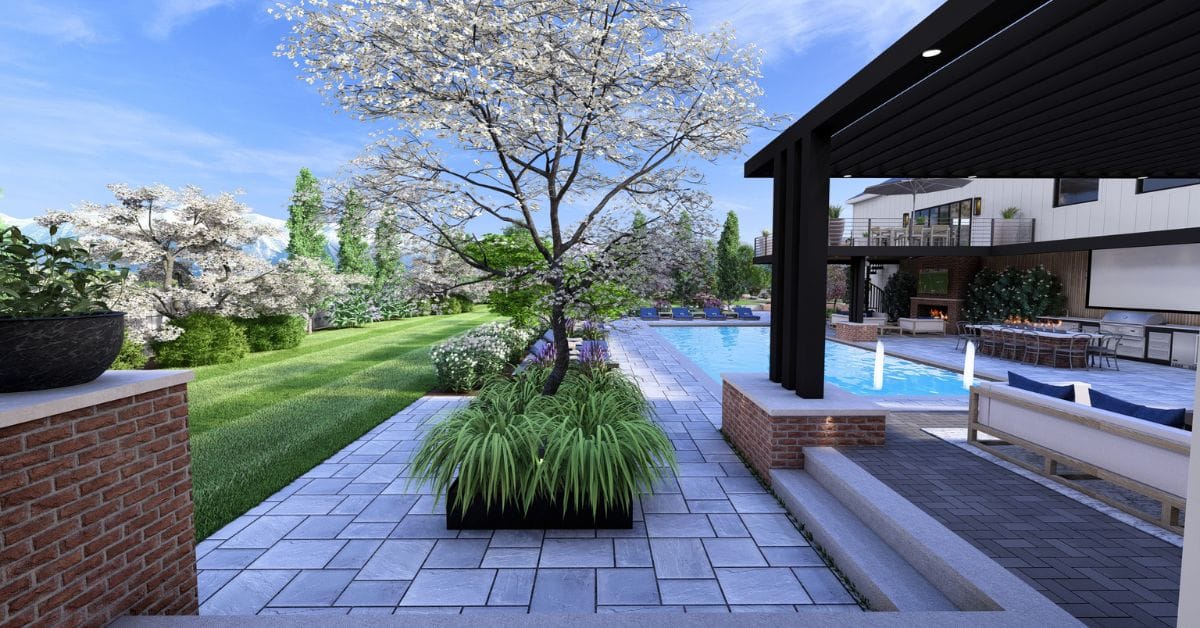
A swimming pool acts as the crown jewel of a backyard, a shimmering expanse of blue that promises relaxation and escape. Yet, a pool without a surrounding environment feels incomplete, like a painting without a frame. The true magic of a luxury outdoor living space lies not just in the water itself, but in how the surrounding elements interact with that central feature. To create a personal resort that captivates the senses, a homeowner must look beyond the pool’s edge and curate the entire landscape.
Designing the space around a pool requires a shift in perspective. You must view the backyard as a cohesive entity where water, stone, flora, and light converge. When these elements harmonize, they create an atmosphere of effortless sophistication. A well-designed surround elevates the swimming experience, turning a simple dip in the water into an immersion in luxury. Here’s how to design outdoor spaces that complement pools.
Planning the Space for Flow and Function
Great design begins with understanding how people move through and occupy a space. Before selecting materials or planting a single shrub, you must map out the functional zones of the area. Consider how you intend to use the poolside environment. Perhaps you envision large social gatherings where guests mingle with cocktails, or maybe you prefer intimate family evenings by a fire pit. Distinguishing these zones establishes a natural flow that prevents bottlenecks and encourages relaxation.
Seamless transitions between the home and the pool deck define a successful layout. Wide pathways and unobstructed sightlines invite movement from the indoors out. You want to avoid placing barriers that make the journey to the pool feel arduous. Instead, the design should pull people outward. Positioning lounging areas to face the best views adds another layer of thoughtful engagement. Every chair, table, and walkway should serve a purpose while contributing to the overall aesthetic narrative.
Integrating Complementary Landscape Elements
A swimming pool should never look like an isolated afterthought dropped into a grassy lawn. It requires integration with the broader environment to feel grounded. This integration often involves manipulating the terrain to embrace the water. Retaining walls, terraced gardens, and elevated decks can cradle the pool, making it feel settled within the landscape. These structural elements provide depth and dimension, preventing the yard from feeling flat or one-dimensional.
Implementing custom landscape design allows you to blur the lines between the built environment and nature. By repeating materials found on the home’s exterior within the hardscape, you create a visual connection that unifies the property. A stone veneer on the house might reappear on the pool beam or an outdoor kitchen, weaving a common thread through the design. This repetition suggests that the pool and the home emerged from the same creative vision, reinforcing a sense of permanence and belonging.
Establishing Mood With Color and Texture
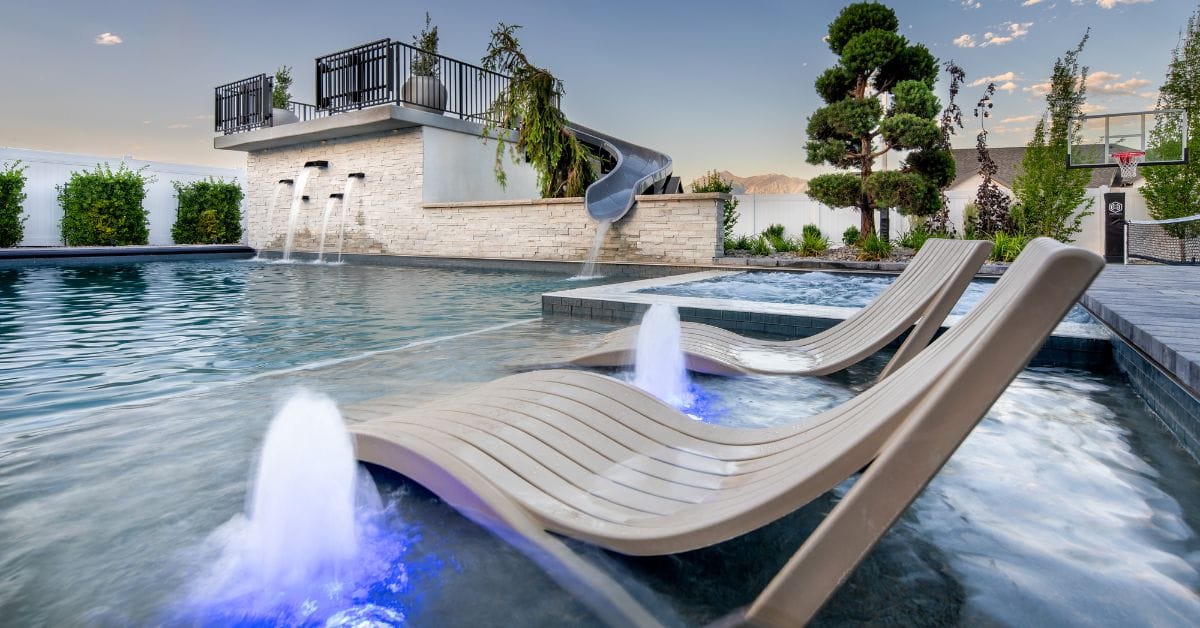
The interplay of color and texture establishes the emotional tone of an outdoor room. A monochromatic palette featuring cool grays and crisp whites evokes a modern, spa-like serenity. In contrast, warm earth tones mixed with vibrant greenery suggest a Mediterranean escape or a tropical hideaway. You must select materials that feel good to the touch and are pleasing to the eye. Rough-hewn stone creates a compelling contrast against the smooth, glass-like surface of still water, while sleek porcelain pavers offer a contemporary, refined finish.
Texture also plays a vital role in safety and comfort. The materials underfoot must provide adequate traction when wet while remaining cool enough to walk on during the height of summer. Non-slip porcelain pavers and concrete pavers often perform beautifully in these conditions, staying comfortable even under a blazing sun. Introducing softness through upholstered furniture and plush towels creates a tactile balance against the hardness of stone and concrete, inviting you to settle in and relax.
Illuminating the Night
When the sun sets, lighting determines whether the pool area remains a welcoming destination or becomes a dark void. Strategic illumination transforms the water into a glowing centerpiece and highlights the architectural features of the landscape. Subtlety serves as the key here. You want to avoid harsh floodlights that wash out details. Instead, rely on layered lighting to create drama and depth.
Uplighting majestic trees draws the eye upward and adds verticality to the night scene. Soft path lights guide steps safely without blinding the walker. Inside the pool, color-changing LED lights allow you to alter the mood instantly, shifting from a crisp, energizing blue to a warm, romantic magenta. Moonlighting, a technique where lights positioned high in trees cast dappled shadows through branches, mimics the natural glow of a full moon. This effect creates an ethereal, tranquil ambiance that makes evening swimming irresistible.
Defining the Foundation With Hardscaping
Hardscaping serves as the skeleton of the landscape, providing the structure upon which everything else rests. The choice of decking material dictates the aesthetic quality of the entire project. Natural stone implies timeless elegance and durability, creating a look that ages gracefully. Concrete pavers offer versatility and precision, allowing for intricate patterns and clean lines that suit modern tastes.
The coping acts as the visual transition between the water and the deck. A drop-face coping creates a seamless, modern edge, while a bullnose profile offers a softer, more traditional look. Extending the hardscape to include built-in seating or raised planters maximizes the utility of the space. These permanent structures anchor the design and provide functional elegance, reducing the need for excessive movable furniture that can clutter the visual field.
Softening Edges With Vegetation
Plants breathe life into the hardscape, softening rigid lines and adding movement. The choice of vegetation around a pool requires careful consideration of maintenance and shedding. You want to avoid trees that drop excessive leaves, seeds, or sap, as these create maintenance headaches and clutter the water. Instead, opt for architectural plants with large leaves or evergreen varieties that keep their foliage year-round.
Ornamental grasses add a swaying motion that mimics the ripples of the water, creating a soothing visual rhythm. Palms and broad-leafed tropicals instantly convey a vacation mindset. For privacy, dense hedges or bamboo screens can shield the pool area from neighbors, creating a secluded sanctuary. Positioning fragrant plants like jasmine or gardenia near seating areas adds an olfactory dimension to the experience, engaging the sense of smell to deepen the feeling of relaxation.
Enhancing Serenity With Water Features
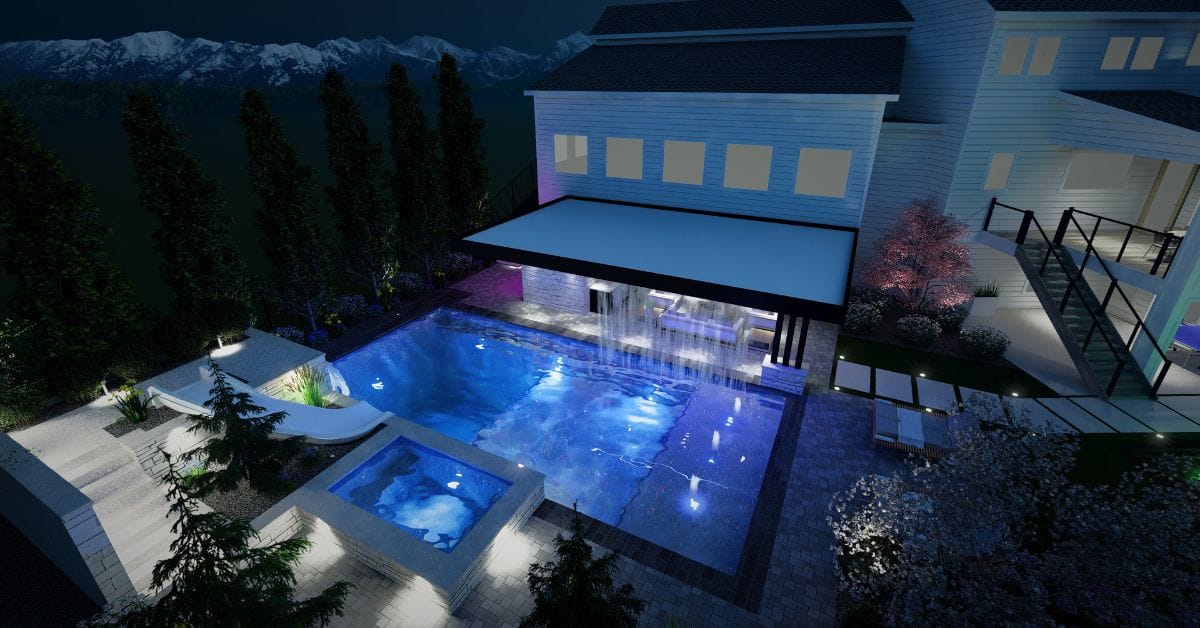
Adding water features beyond the pool itself introduces sound and movement that elevate the sensory experience. The gentle sound of falling water acts as white noise, masking traffic sounds and deepening the sense of tranquility. Sheer descents, where a sheet of water spills from a raised wall into the pool, create an elegant, architectural visual.
Bubblers on a sun shelf introduce playful movement and entice children and adults alike. For a more dramatic effect, fire and water bowls combine opposing elements to create a primal, mesmerizing focal point. These features serve as living art, dynamic and ever-changing. They keep the eye engaged and add a layer of sophistication that distinguishes a custom luxury pool from a standard installation.
Creating Your Personal Sanctuary
Designing the space around a pool demands an eye for detail and a commitment to quality. When you harmonize the hardscape, lighting, plants, and furniture, you create more than just a backyard; you build a personal sanctuary. This holistic approach transforms a simple body of water into an immersive retreat that enriches daily life. By considering how every element interacts, you forge an outdoor environment that reflects refined taste and supports a lifestyle of leisure and connection. The result stands as a testament to the idea that true luxury lies in the thoughtful curation of one’s surroundings.
