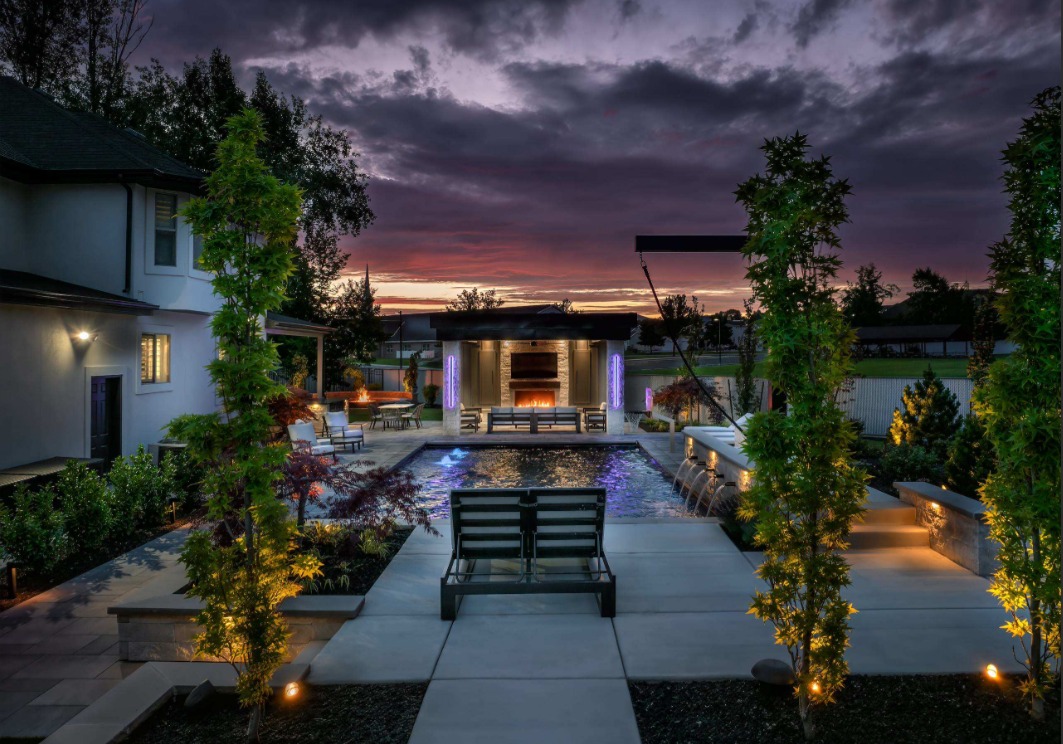
A custom pool can anchor an outdoor living space during the day, but thoughtful lighting reveals an entirely different side of the design after sunset. Light creates depth, highlights architectural details, and gives water a sense of movement that changes as guests travel through the landscape. The right lighting plan also connects the pool to patios, planting areas, walkways, and gathering spaces instead of leaving it isolated in a dark backyard.
For homeowners investing in a sophisticated outdoor environment, nighttime design deserves the same attention as materials, proportions, and construction. MTN MOD explores how lighting transforms luxury pool nightscapes so that you can take your evenings from good to great.
Start With the Nighttime Experience
Successful pool lighting starts with a clear vision for how the property should feel after dark. Some homeowners want a quiet retreat with soft reflections, while others envision a dramatic entertaining space that stays lively well into the evening. A luxury pool builder can use those goals to determine where illumination belongs, how bright each area should feel, and which features deserve visual emphasis. This experience-first approach keeps the lighting plan intentional instead of filling the property with fixtures simply because space allows them.
Designers also consider how homeowners and guests will move through the environment once natural daylight disappears. Someone walking from the house toward the pool should experience a comfortable visual transition rather than moving between overly bright and poorly lit zones. Lighting can gently lead the eye from an outdoor kitchen to a lounge area, across a path, and toward the water. This progression makes the entire backyard feel connected, polished, and easy to enjoy.
Layer Light Instead of Relying on One Source
Luxury nightscapes rarely depend on a single type of illumination because one source cannot create enough visual dimension. Designers layer underwater lighting with landscape fixtures, architectural accents, pathway illumination, and carefully selected task lighting. Each layer performs a different job while contributing to one cohesive composition. When designers balance those layers carefully, guests notice the atmosphere rather than the individual fixtures producing it.
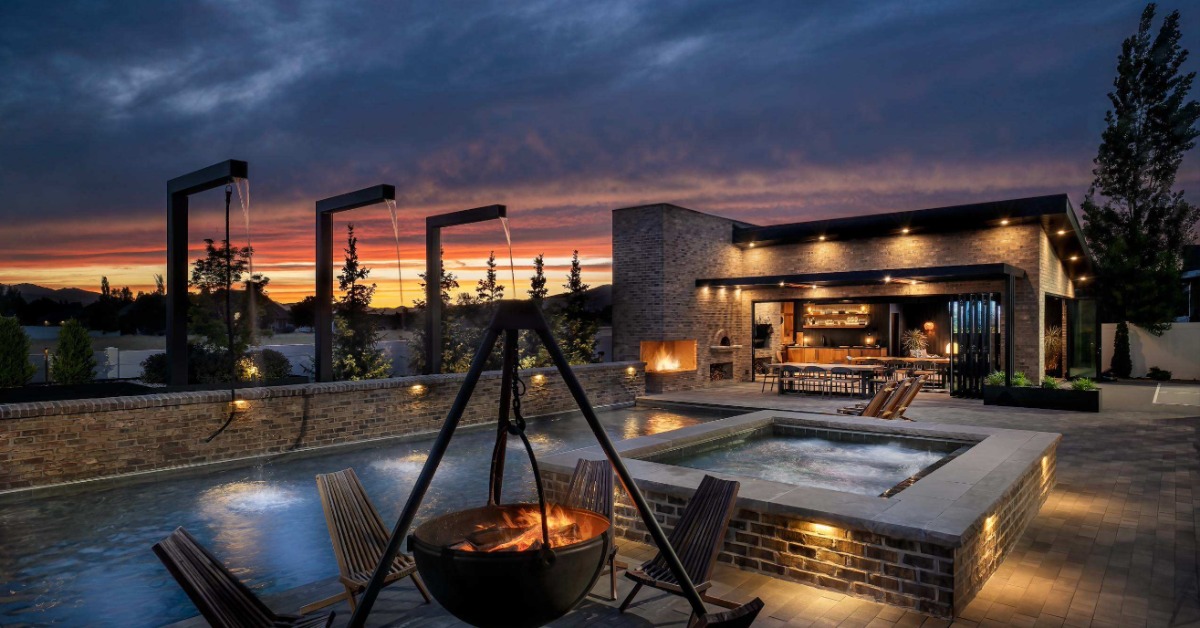
A thoughtful plan may incorporate several lighting elements throughout the landscape, such as:
- Underwater lights that give the pool depth and visual clarity
- Path lights that can define circulation around the property
- Step and wall lights that illuminate elevation changes
- Accent fixtures that showcase trees, stonework, or architectural details
- Task lighting near grills, kitchens, bars, and serving areas
- Soft ambient lighting around lounges and conversation spaces
Highlight Architecture and Custom Features
Premium pools often include details that deserve attention long after daylight fades. Waterfalls, raised spas, fire features, retaining walls, integrated planters, and custom stonework can become striking nighttime focal points with precise illumination. Grazing light across textured stone reveals depth and craftsmanship, while subtle accents around a spa can distinguish it from the main pool. Lighting gives these features a second visual identity and extends the impact of the original design investment.
Architectural lighting can also strengthen the relationship between the home and the pool area. Designers may repeat similar lighting temperatures, fixture styles, or visual rhythms across both environments to create continuity. This connection matters when large windows or glass doors provide direct views of the backyard from interior rooms. A well-lit outdoor setting effectively becomes part of the home’s evening scenery rather than disappearing beyond the glass.
Create Comfortable Spaces for Evening Entertaining
A luxury pool environment often supports much more than swimming, especially when homeowners use the backyard for dinners, celebrations, and relaxed evenings with friends. Lighting should support each activity without overwhelming the people using the space. An outdoor kitchen needs enough task lighting for food preparation, while a dining table benefits from warmer illumination that creates intimacy. Lounge areas can remain softer, allowing guests to enjoy conversation without harsh light competing with the pool.
Good lighting also defines separate outdoor rooms within a larger landscape. A brighter culinary area can transition into a softly illuminated seating zone before drawing attention toward the water. Changes in intensity give each space a distinct purpose while preserving a cohesive overall mood. Homeowners gain a backyard that feels equally suited to an intimate weeknight dinner or a larger weekend gathering.
Let Landscape Lighting Frame the Pool
Pool and landscape design achieve their greatest impact when professionals develop them as one composition. Trees, ornamental grasses, sculptural plants, retaining walls, and grade changes create opportunities to build depth beyond the pool’s immediate edge. Uplighting a mature tree can establish a dramatic backdrop, while lower fixtures can reveal layered planting closer to the water. These techniques prevent the illuminated pool from appearing like a bright object surrounded by darkness.
Utah landscapes make this broader approach particularly compelling because many properties feature dramatic terrain, mountain views, or strong architectural relationships with nature. Designers can illuminate foreground elements without overpowering distant scenery or flooding the property with unnecessary light. Strategic restraint often produces a richer view because darkness itself becomes part of the composition. A finished nightscape feels grounded in its surroundings instead of disconnected from the broader landscape.
Choose Color Temperature With Intention
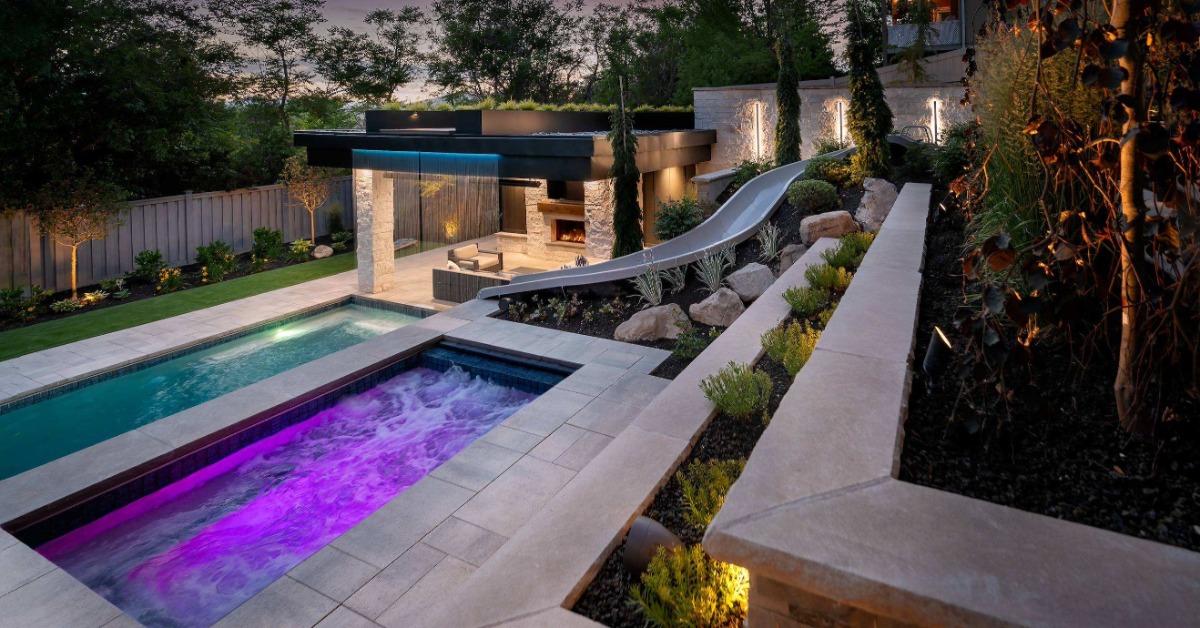
Color temperature has a major influence on how materials and water appear after sunset. Warm light can complement natural stone, wood, fire features, and comfortable gathering areas, while cooler tones may sharpen contemporary surfaces or enhance certain water colors. Mixing temperatures without a plan can make an otherwise refined landscape feel visually fragmented. Designers therefore select light qualities that support the material palette and the emotional character of the property.
Furthermore, color-changing pool lights can add flexibility, but luxury design usually benefits from restraint rather than constant dramatic shifts. Homeowners may enjoy a special color for a holiday or party while relying on a more timeless setting for everyday use. The goal should center on enhancing architecture and atmosphere instead of turning every fixture into a competing visual event. Thoughtful controls make it easy to adapt the setting without compromising the sophistication of the permanent design.
Design Lighting as Part of the Complete Outdoor Vision
MTN MOD approaches pools and landscapes as complete living environments where every detail contributes to the final experience. With design and construction working together, homeowners can create a backyard that feels intentional in bright Utah sunshine and equally compelling after sunset. Carefully layered lighting extends usable hours, reveals craftsmanship, and creates an atmosphere that invites people to remain outdoors longer. When lighting becomes part of the architecture itself, a beautiful pool transforms into an unforgettable nighttime destination.
