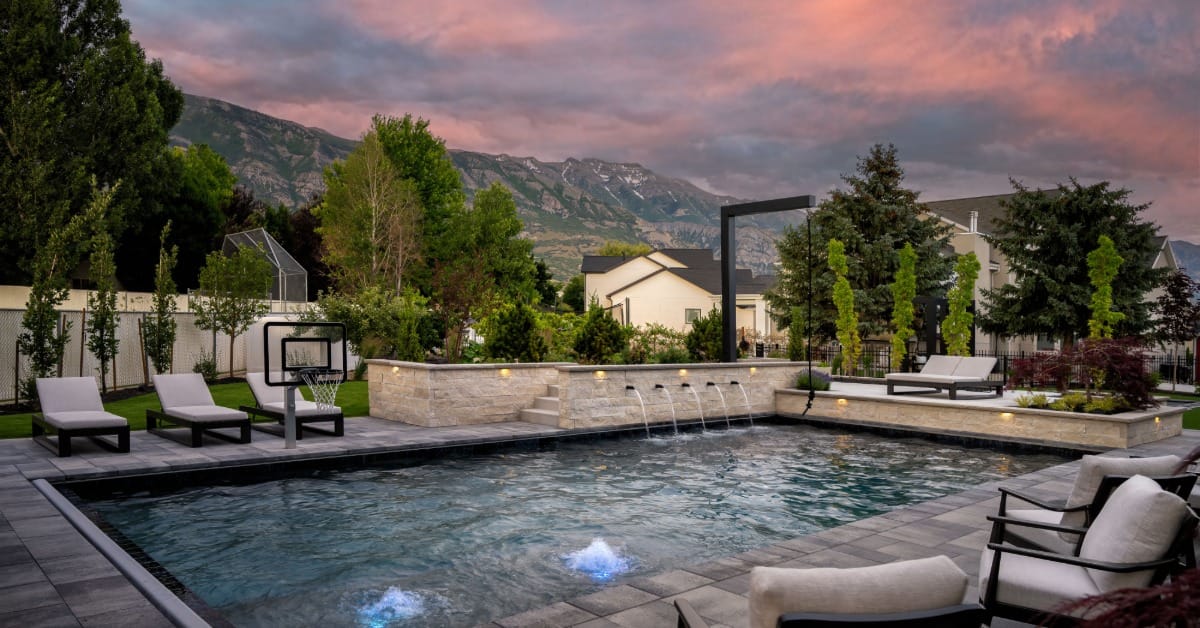
When you’re investing in a custom pool, one of the biggest decisions happens before you start thinking about the fun stuff: Where should it go?
For many homeowners, an outdoor pool feels like the natural answer. But an indoor pool can offer an entirely different experience, particularly in a climate where outdoor swimming has a defined season. Having worked with homeowners who want their pool to become a meaningful part of their lifestyle, we know there is no universal “right” choice.
Indoor and outdoor pools each have distinct pros and cons. Understanding those differences can help you create a space you’ll genuinely enjoy using rather than one that simply looks impressive.
The Case for an Outdoor Pool
There’s a reason outdoor pools are such a defining feature of luxury landscapes. When thoughtfully designed, the pool doesn’t feel like somebody placed it in the backyard. It feels like it belongs there.
Pro: You Get the Full Outdoor Living Experience
An outdoor pool can completely change the way you use your property. Instead of looking out at your landscape, you have a reason to spend more time in it.
This is especially important when we design larger outdoor living environments. The pool might connect to a covered lounge or lead into a dining terrace. On another property, it might become the visual centerpiece you see from inside the home. Rather than treating each feature separately, we prefer to think about how people will naturally move through the entire space.
That approach makes a pool useful even when no one is swimming. It becomes part of the property’s atmosphere and can transform what you see every time you look outside.
Pro: Outdoor Pools Offer Incredible Design Possibilities
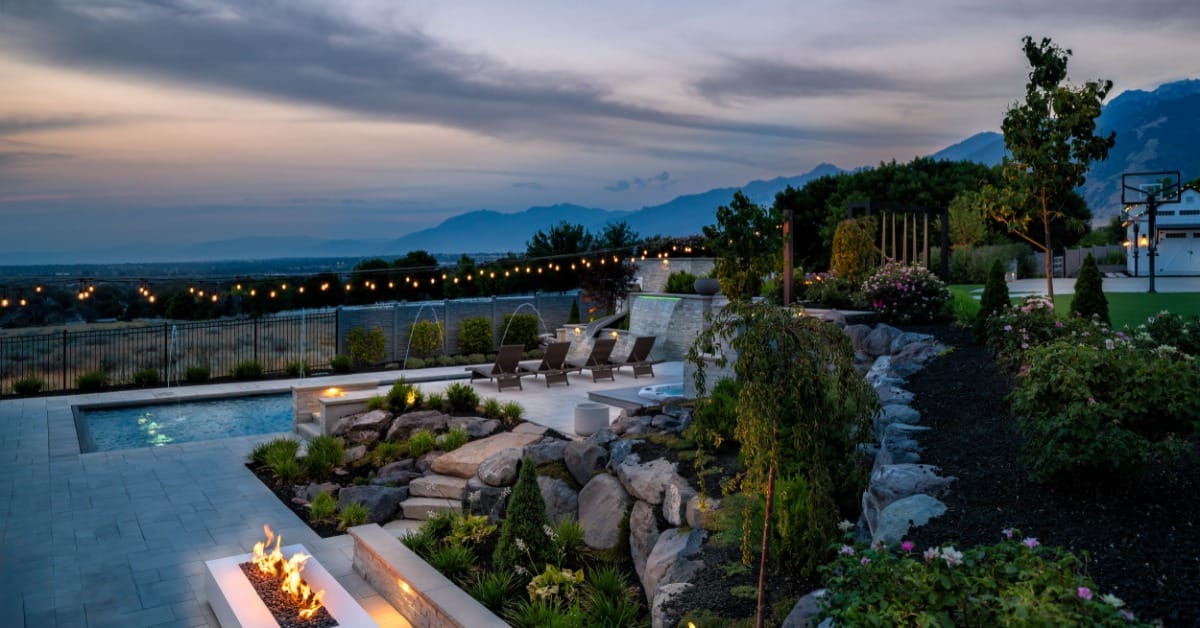
One of our favorite parts of designing outdoor pools is working with the property itself. Existing architecture and landscaping can help guide the design, while views or elevation changes may create opportunities that would be impossible to replicate on another property.
A home overlooking the mountains, for example, may be an excellent candidate for a vanishing edge that visually connects the water with the horizon. Another backyard may benefit from a more intimate pool surrounded by natural stone and mature plantings, creating a sense of privacy.
Con: Your Swimming Season Is Weather-Dependent
The most obvious limitation of an outdoor pool is that Mother Nature still gets a vote.
In regions with cold winters, homeowners won’t necessarily use an outdoor pool year-round. Heating systems can extend the season, but eventually colder temperatures make outdoor swimming less practical.
That doesn’t mean the space stops providing value. Thoughtful lighting can keep the pool visually interesting after swimming season ends, while landscaping and surrounding architectural features help the entire backyard remain appealing throughout the year.
Con: Outdoor Maintenance Comes With Extra Variables
Outdoor pools interact directly with their surroundings. Leaves and pollen can find their way into the water, and changing weather conditions introduce another variable that indoor pool owners generally don’t have to think about.
We recommend thinking about maintenance during the design process instead of treating it as an afterthought. Features such as automated covers and smart pool controls can make everyday ownership much more convenient, but upkeep still needs consistency.
The Case for an Indoor Pool
Indoor pools offer a completely different type of luxury. Rather than becoming part of the landscape, they create a private environment where swimming can be part of everyday life, no matter what’s happening outside.
Pro: Swimming Becomes a Year-Round Activity
For homeowners who swim regularly, this is often the strongest reason to bring the pool indoors. Snow on the ground doesn’t have to change your morning swim.
An indoor pool also gives homeowners much more control over the swimming environment. Water temperature can stay comfortable throughout the year, and you can design the surrounding room specifically to your preference.
Pro: You Have More Privacy
Privacy is another major advantage of an indoor pool. Strategic landscaping can create impressive privacy outdoors, but an indoor space naturally feels more secluded.
That can change the way homeowners use their pool. An indoor pool can feel less like an entertainment feature and more like a personal retreat. However, the design can still incorporate expansive windows or glass doors. You can maintain a visual connection to the landscape while still enjoying the protection of an interior environment.
Con: Indoor Pools Require Specialized Planning
An indoor pool isn’t simply an outdoor pool with a building around it. The environment has to be engineered around the presence of a large body of water.
Humidity control deserves serious attention from the earliest stages of planning, as does ventilation. Materials throughout the space also need to withstand ongoing moisture exposure.
These technical considerations are exactly why the design team needs to look at the entire environment from the beginning. When the pool and architecture are planned alongside the necessary mechanical systems, the finished room can feel effortless even though a great deal is happening behind the scenes.
Con: You Lose Some of the Connection to the Outdoors
Even the most beautiful indoor pool has a different atmosphere from swimming beneath an open sky.
If your property has incredible views or you love spending summer days outside, enclosing the pool may mean giving up part of the experience you value most. Large windows and retractable doors can help bridge that divide, but they won’t completely recreate the feeling of an outdoor pool.
This is where lifestyle becomes more important than a simple pros-and-cons list. Think about the experience you picture when you imagine using your finished pool.
Could You Get the Best of Both Worlds?
For some homeowners, the indoor-versus-outdoor decision doesn’t have to be completely black and white.
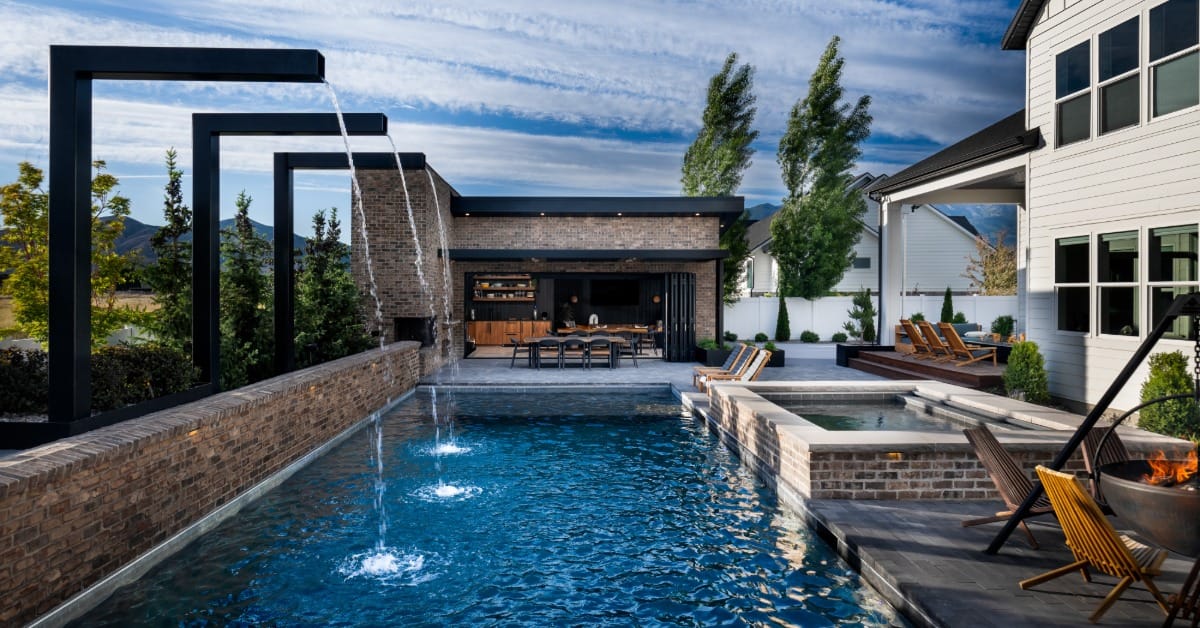
An indoor pool space with expansive glass doors can open to a patio during warmer months. Covered or partially enclosed pool designs can provide additional shelter while maintaining a strong outdoor connection.
Even an outdoor pool paired with a well-designed cabana or pavilion can provide some of the comfort people associate with an indoor environment. These hybrid approaches require careful planning, but they can create a pool experience tailored very closely to the way you live.
Design the Pool Around Your Life
After decades as luxury pool designers in Salt Lake City, one lesson became clear: A beautiful pool isn’t automatically a successful pool. The best designs are the ones homeowners actually want to use.
An outdoor pool may be perfect if you picture summer evenings by the water and want the pool to become part of a complete landscape. An indoor pool may make more sense if swimming is part of your routine and year-round accessibility matters most.
Either way, start with the experience rather than a list of features. At MTN MOD, we believe a custom pool should feel connected to the home and thoughtfully integrated into its surroundings. Most importantly, it should be designed around the people who will enjoy it. When those priorities lead the process, the result becomes much more than a place to swim.
